OpenOffice
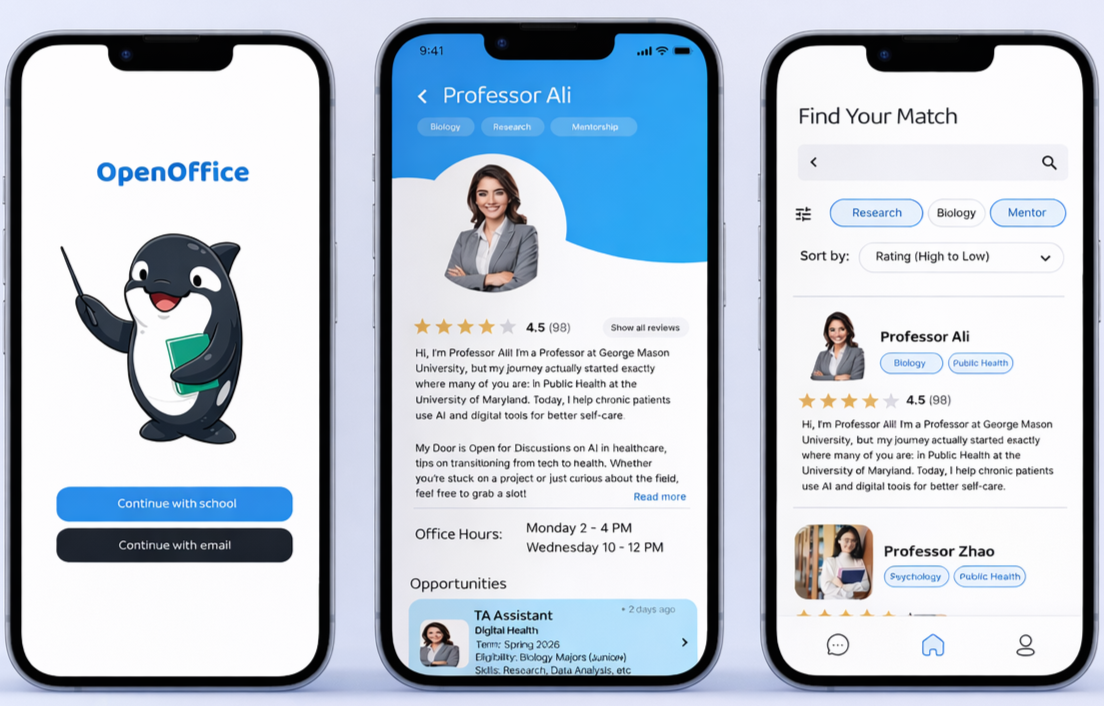
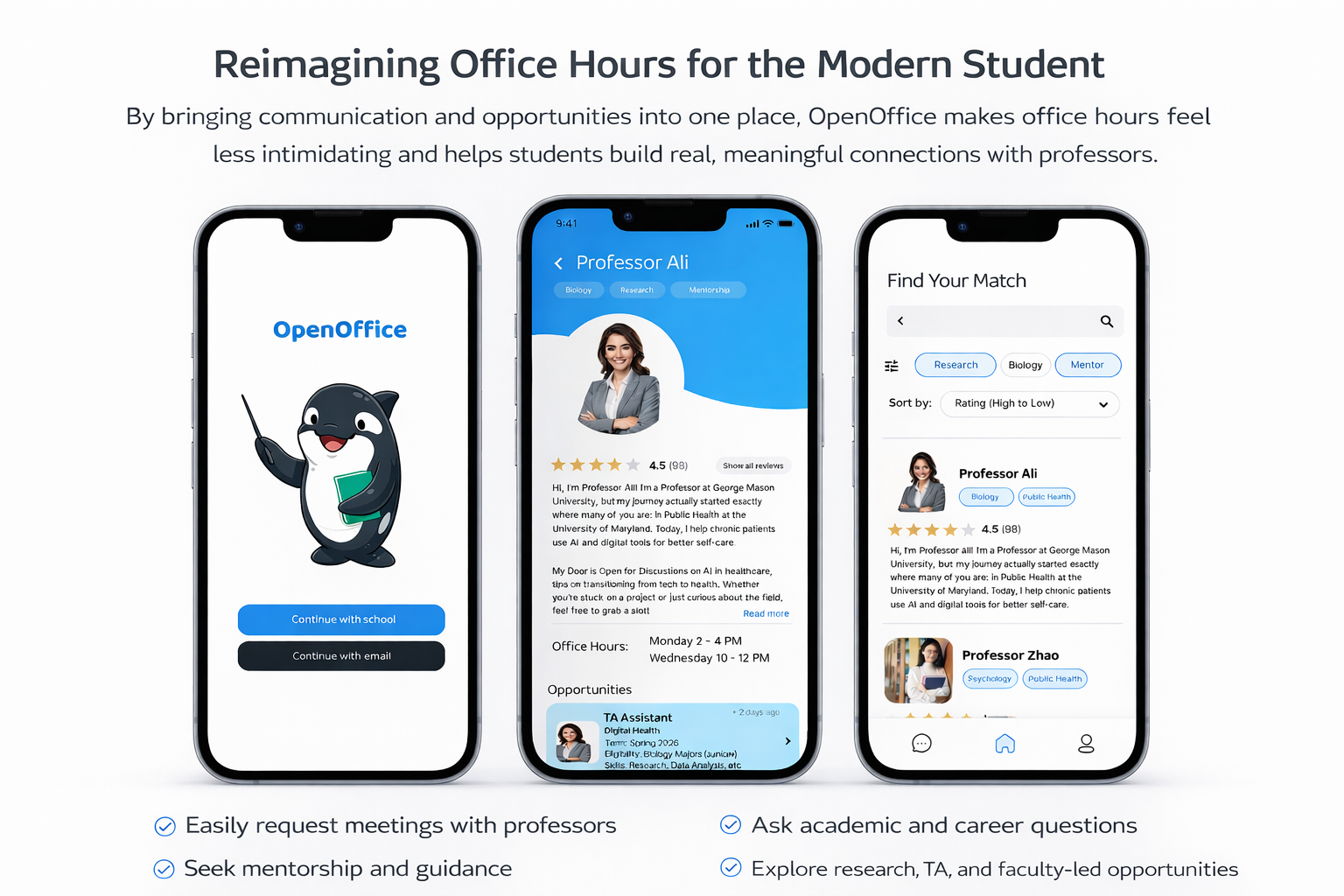
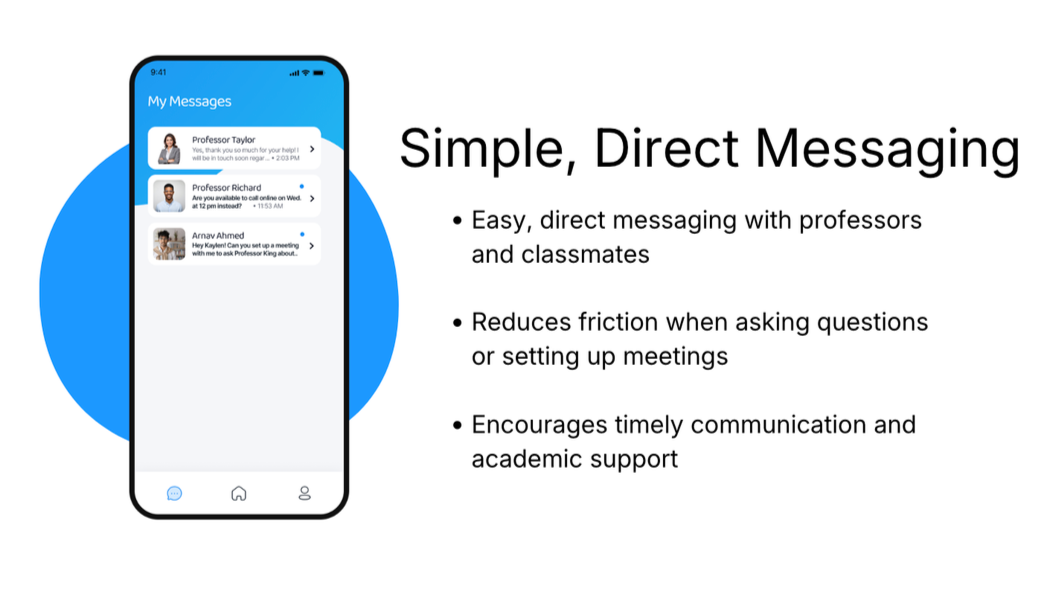
A university-focused platform designed to make professor–student connections more accessible and human. OpenOffice allows students to easily request meetings, ask academic or career questions, seek mentorship, and explore research, TA, and faculty-led opportunities within their university.
By bringing communication and opportunities into one place, OpenOffice makes office hours feel less intimidating and helps students build real, meaningful connections with professors.
Role: UX/UI Designer, Product Strategist
Project Duration: 5 weeks
Read Time: 5 minutes
Solution
Problem
College Students find Office Hours intimidating & “hectic” to schedule.
As a college student, I’ve noticed that many of my classmates and I rely heavily on group chats to ask questions and get quick help. While these spaces feel comfortable and low-pressure, very few of us actually take the step to schedule an appointment or attend office hours with a professor.
Over time, I realized that professors are humans too.
They can be mentors, guides, and valuable connections. Building relationships with professors can open doors to academic support, research opportunities, and career guidance, but the current culture often makes that first step feel intimidating or unnecessary.
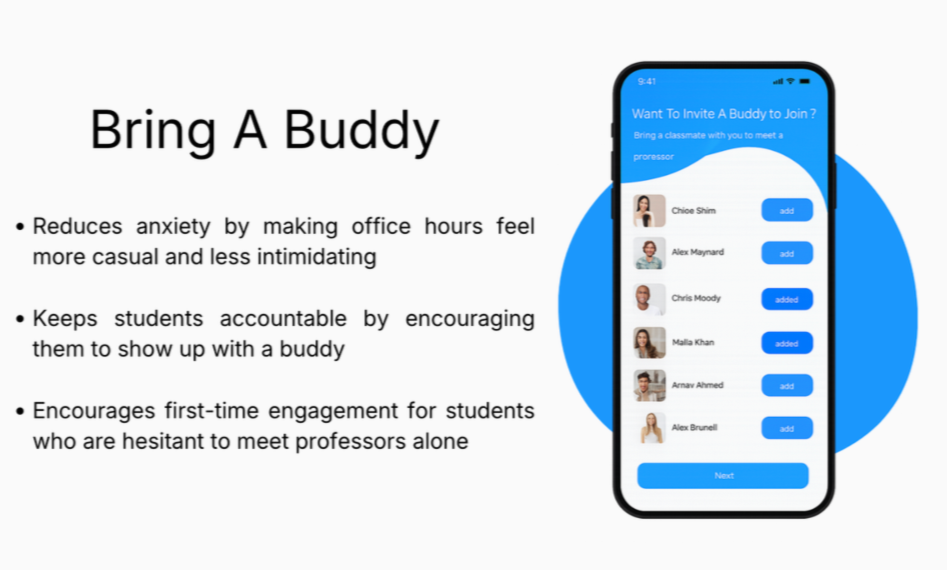
Students often fail to get the help they need. Not because support isn’t available, but because anxiety makes asking for help feel intimidating.
“How can we make students feel comfortable starting meaningful conversations with their professors?
Research
DIVING DEEPER INTO THE PROBLEM
User Interviews + Competitive Analysis
“About 1 in 10 students describe office hours as ‘scary’ or intimidating, highlighting emotional barriers that prevent students from reaching out to professors.” - National Library of Medicine
I personally struggled with scheduling appointments with professors and missed potential academic opportunities. I wanted to understand whether this was a shared experience among other students.
To explore this, I conducted 10 one-on-one interviews with George Mason University students, focusing on their pain points around professor access and identifying ways to make academic support more approachable and easier to navigate.
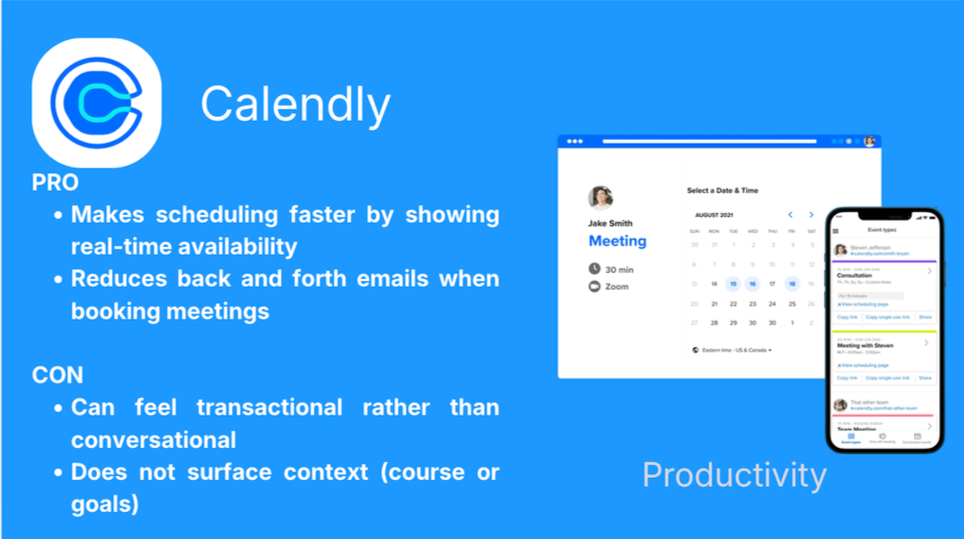
In addition, because there are very few platforms dedicated specifically to professor networking, I expanded my research to include commonly used education-tech tools. I analyzed two widely used student platforms to identify patterns in how students currently engage with faculty and academic resources. This competitive analysis helped uncover usability gaps and design opportunities that could inform improvements in accessibility, clarity, and student-professor connection.
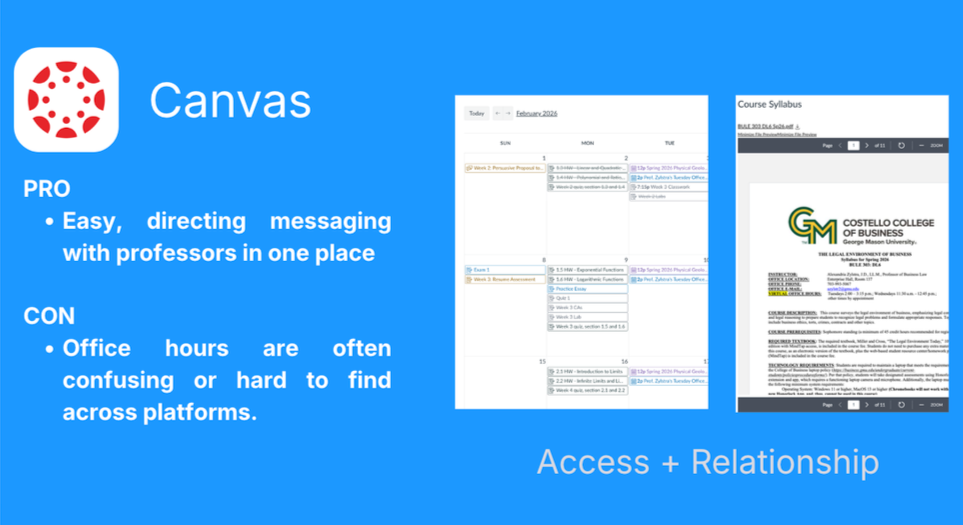
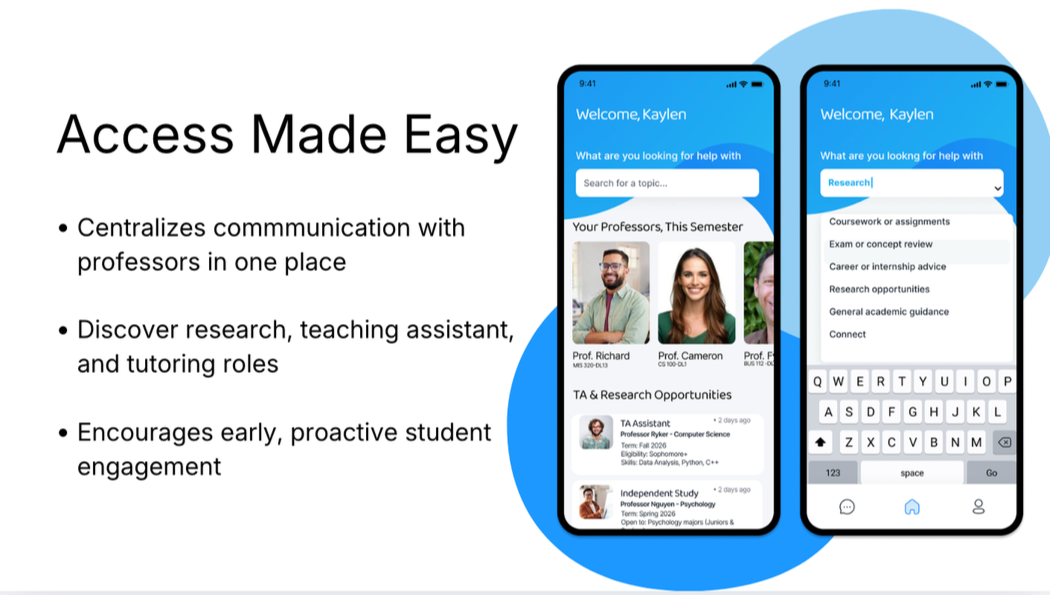
Building on this finding, I examined Canvas, a platform widely used by college students, to explore how existing academic tools might reduce these barriers. Because Canvas already contains verified course enrollments and professor information, I identified an opportunity to integrate Canvas with the proposed application so that professors, courses, and schedules are automatically synced. This integration could lower the psychological effort required to initiate contact, making professor engagement feel more familiar, accessible, and low-stakes for students.