PHX 311 Chatbot Customer Engagement
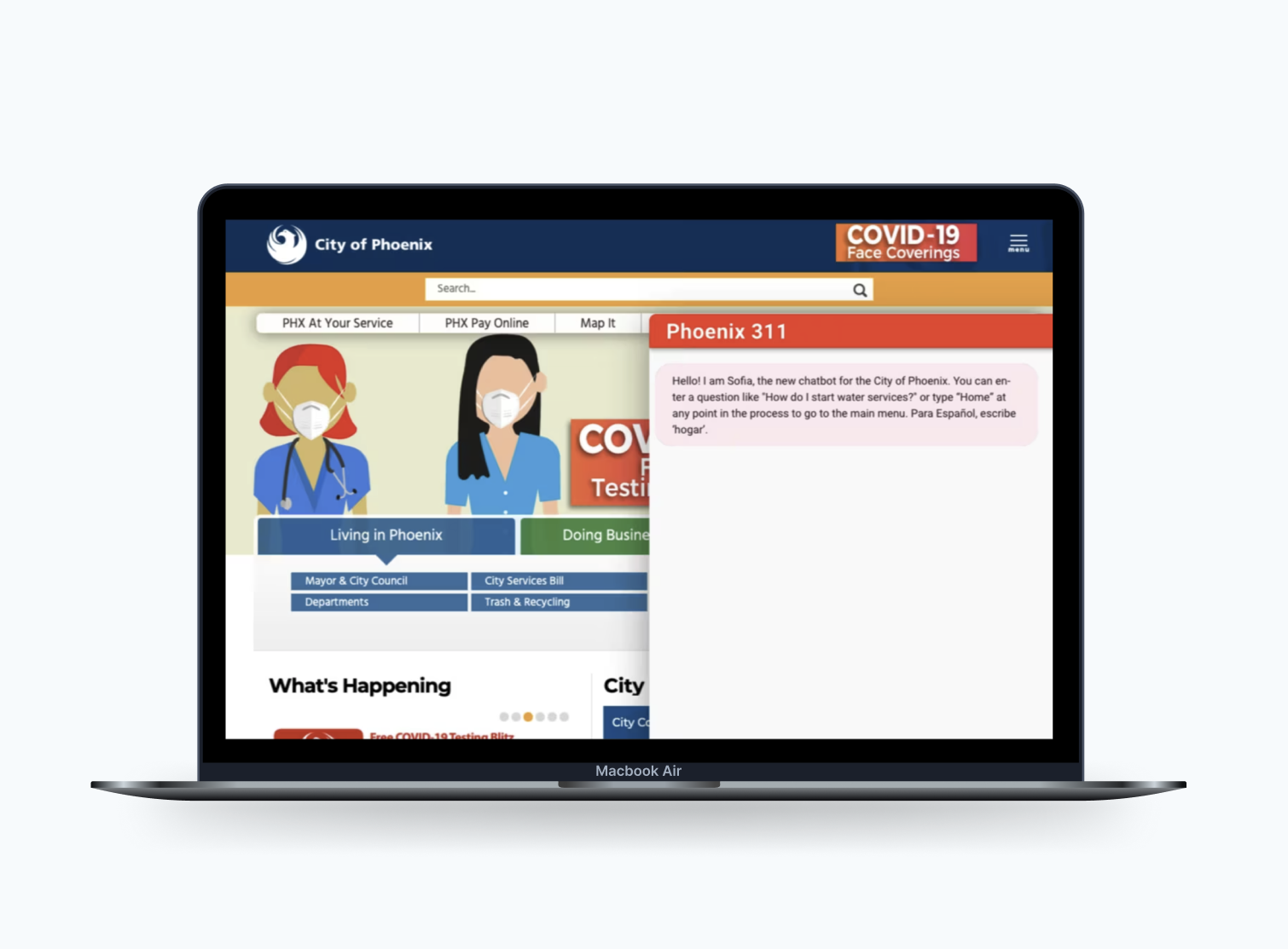
A conversational digital assistant designed to improve how residents access city information and services. The chatbot enables 24/7 self-service support, reduces friction in navigating city resources, and helps the City of Phoenix deliver consistent, accessible customer engagement at scale.
Role : Project Manager Intern (UX & Service Design Support)
Organization: ASU Smart Cities Cloud Innovation Center (CIC)
Partners: City of Phoenix, Amazon Web Services (AWS)
Project Duration: 3 months (2020)
Focus Areas: Conversational UX, Service Design, Public-Sector Innovation
Read Time: 5 minutes

Problem
Accessing essential services in the City of Phoenix shouldn’t feel like a challenge
When the COVID-19 pandemic shifted many city services online, thousands of Phoenix residents were suddenly required to manage essential tasks digitally, often for the first time. Instead of simplifying access, these systems introduced new barriers, leaving many residents overwhelmed and unsure where to turn for help.
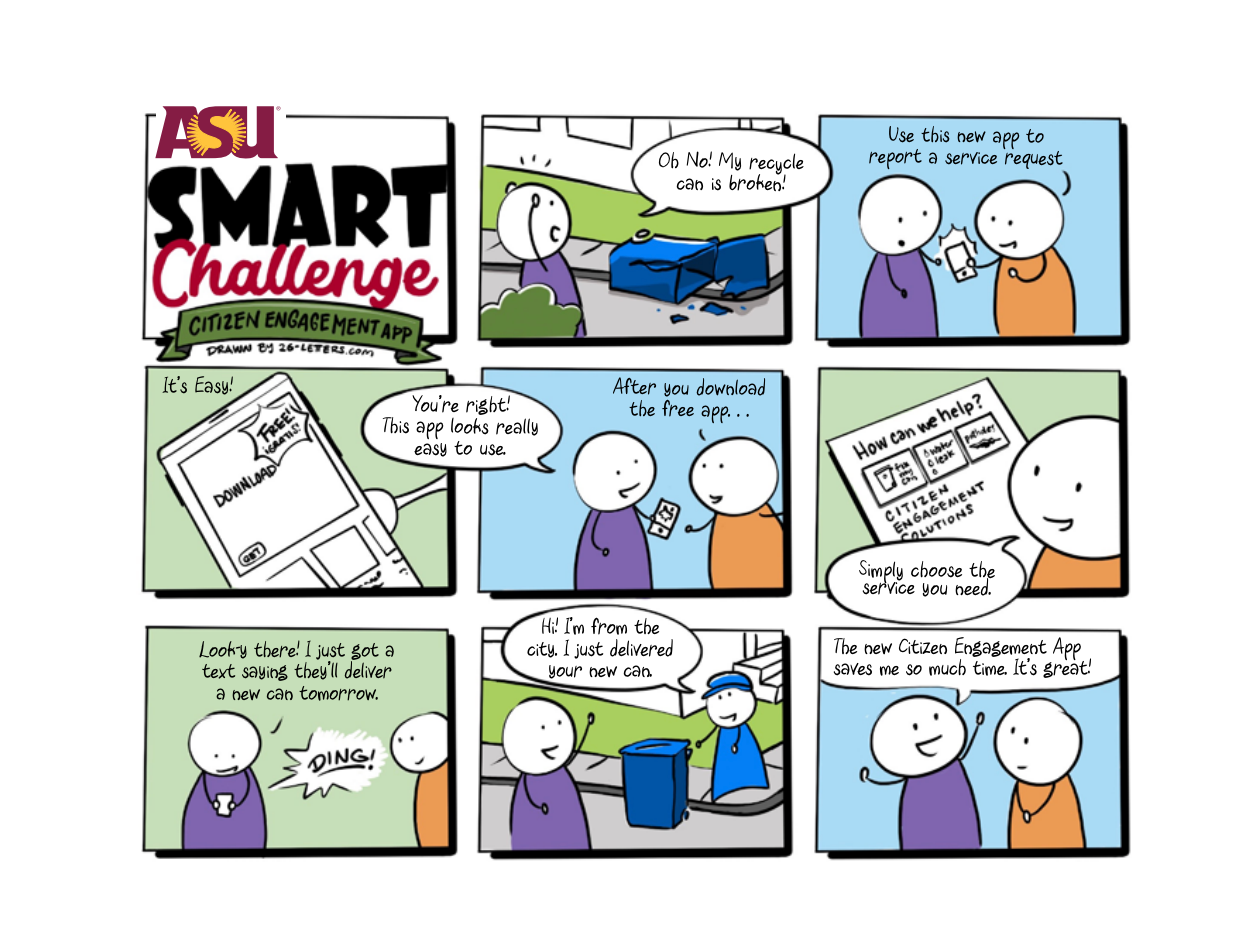
To address this challenge, the ASU Smart City Cloud Innovation Center, powered by AWS, partnered with the City of Phoenix to explore better ways for residents to access essential 311 services such as water and trash in a clear, accessible way.
Pandemic pressure
Residents needed quick answers, but existing online systems were not built to handle the sudden increase in digital use. Even simple tasks became stressful when support was difficult to find.Too many places to look
Essential services such as water, trash, and payments were spread across multiple systems. Residents often had to jump between pages and guess where information might be located
Who was left out
Existing digital tools did not fully support visually impaired residents or Spanish speaking communities. This created gaps in access at a time when inclusive design mattered most.
Designing for Access, Not Navigation
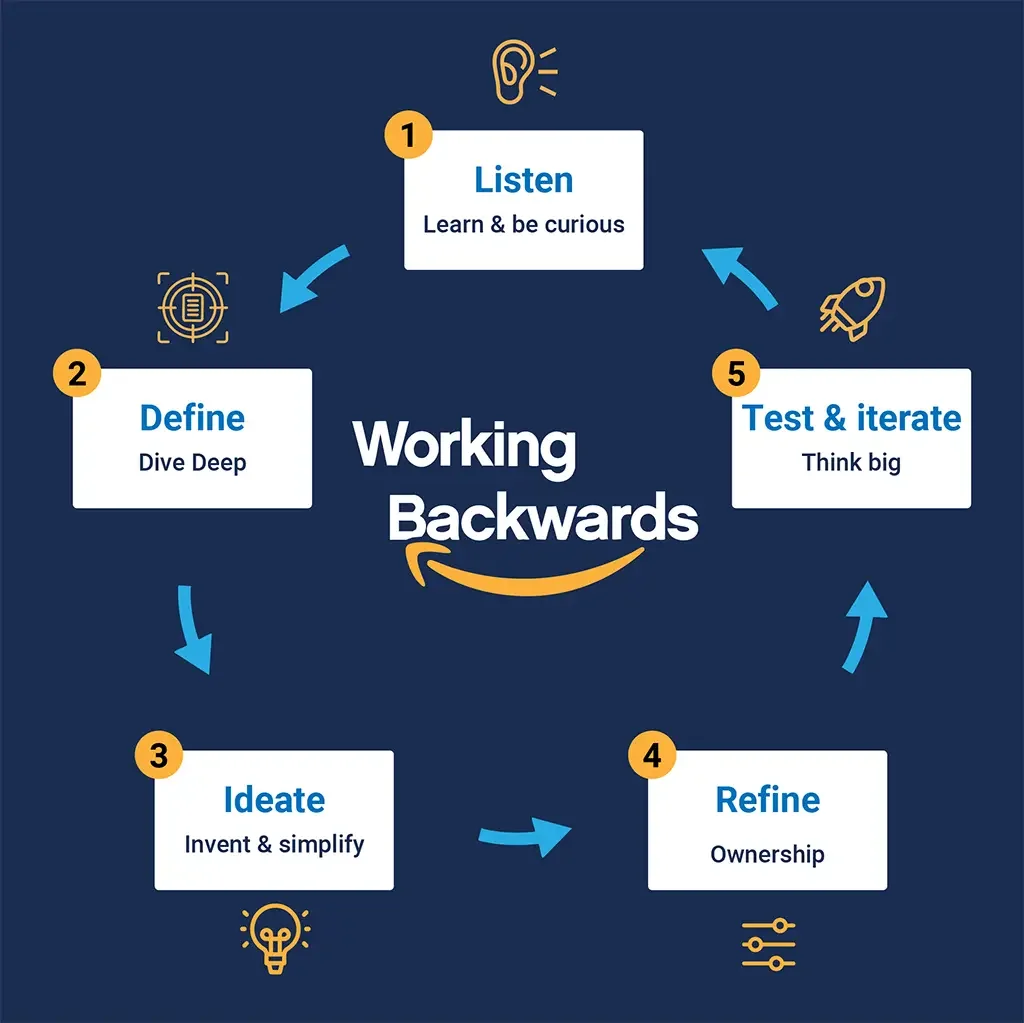
Using Amazon’s Working Backwards methodology
ASU Smart City Cloud Innovation Center team designed the chatbot by starting with the final resident experience. I focused on ensuring the solution met residents where they are, rather than requiring them to learn how the city website works.
Residents needed fast, accessible answers during periods of high demand, but site navigation and language barriers made city services difficult to use on the City of Phoenix website.
Designing a Conversation That Feels Effortless
Through conversations with City of Phoenix stakeholders,
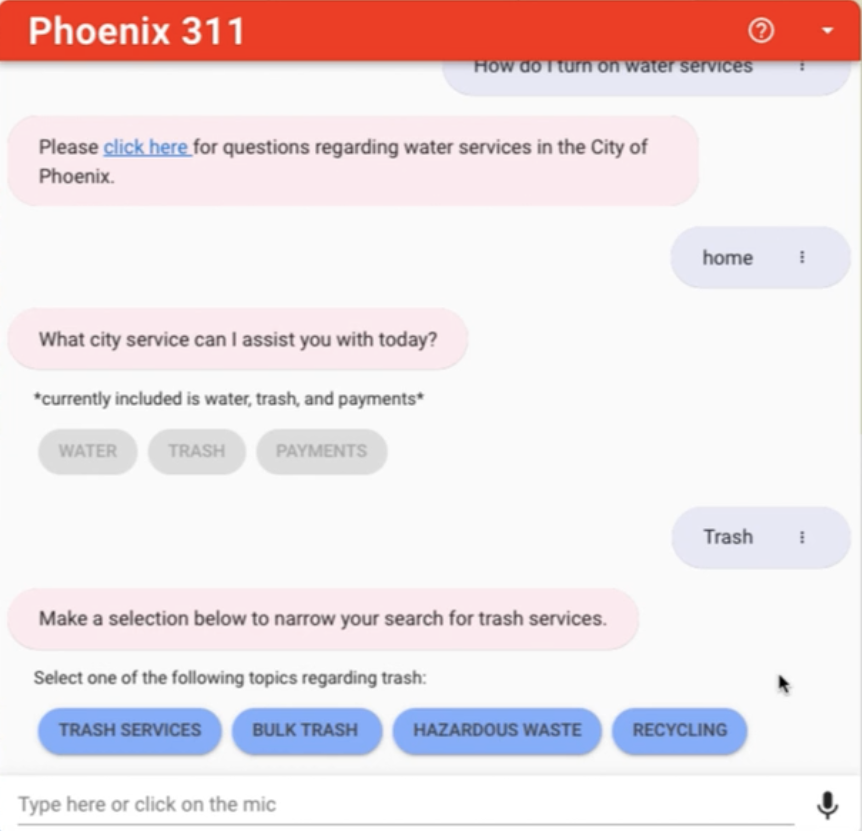
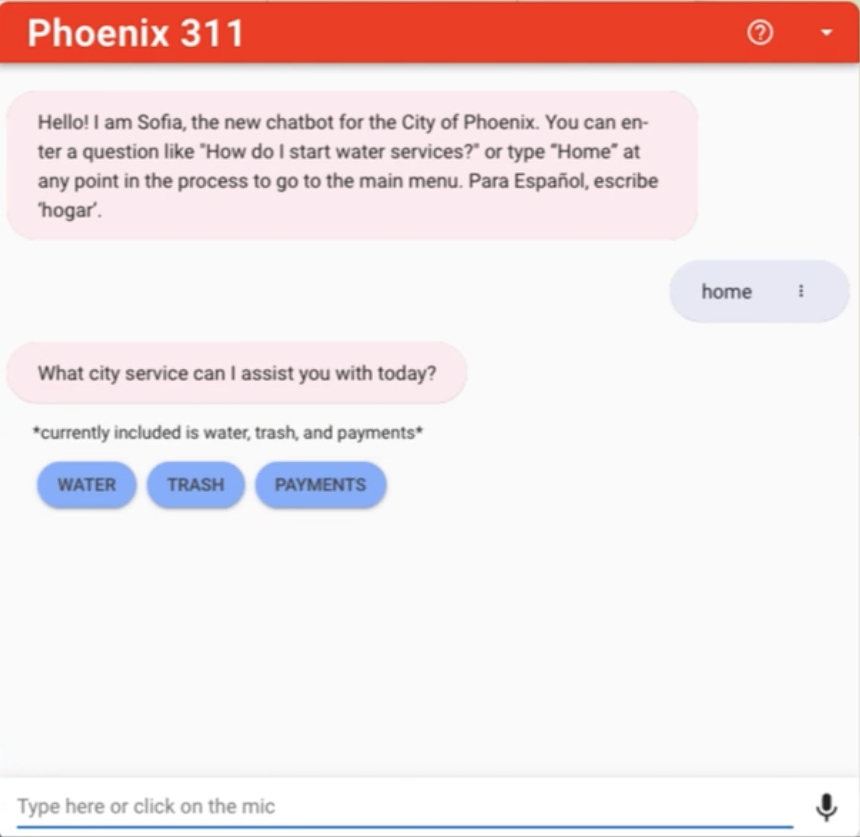
I replaced complex navigation with three clear entry points:
Water
Trash
Payments
These buttons gave residents an immediate place to start without guessing where to click.
Low-Fidelity Wireframes
Exploring the Chatbot Flow
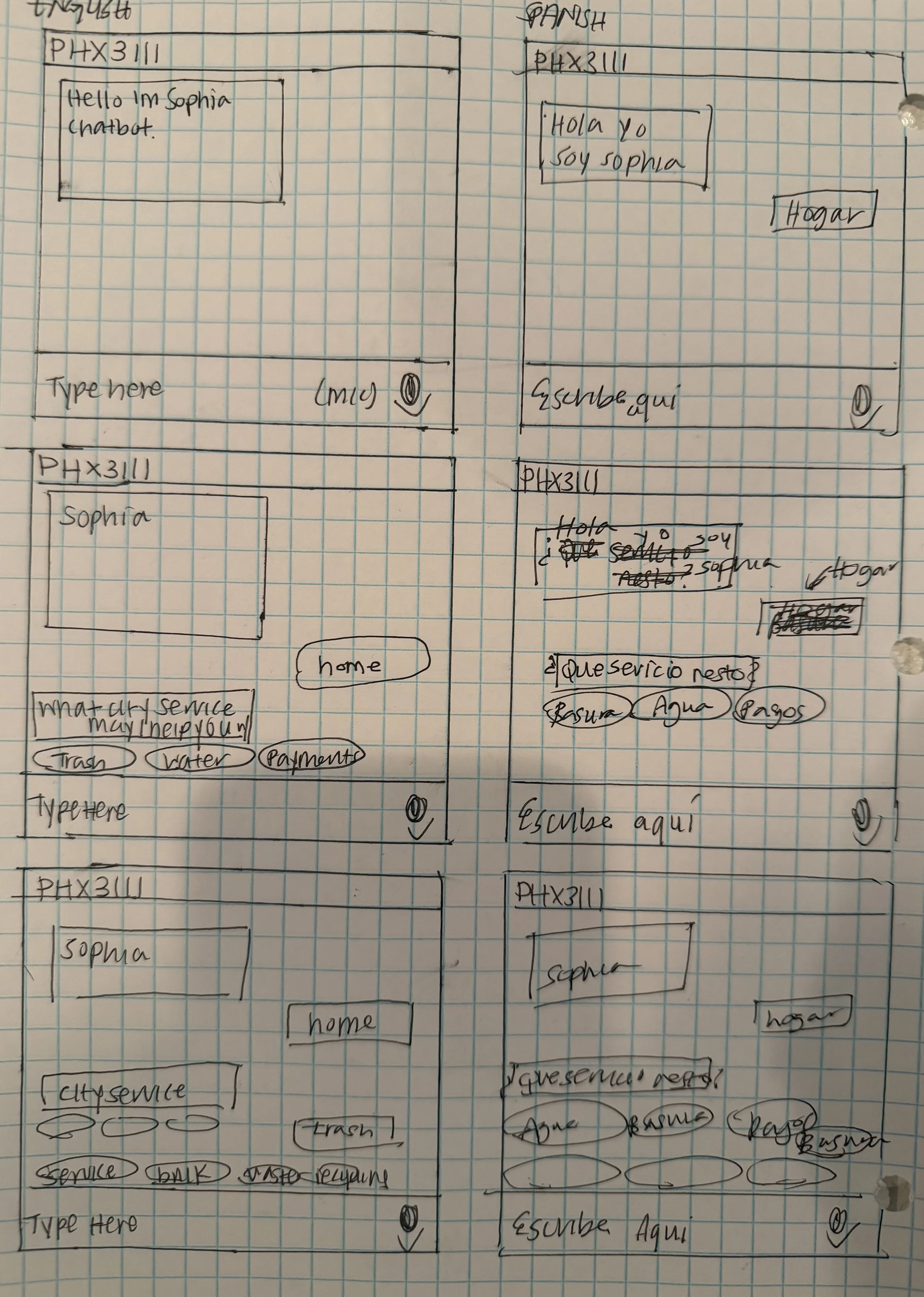
These wireframes show how the chatbot guides residents from question to answer through a simple, accessible, and bilingual experience.
Equal Access in English and Spanish
Phoenix is home to a large Spanish-speaking population, making language access essential to ensuring all residents can easily understand and use city services.
I helped design identical conversational flows in both English and Spanish, using equivalent keywords
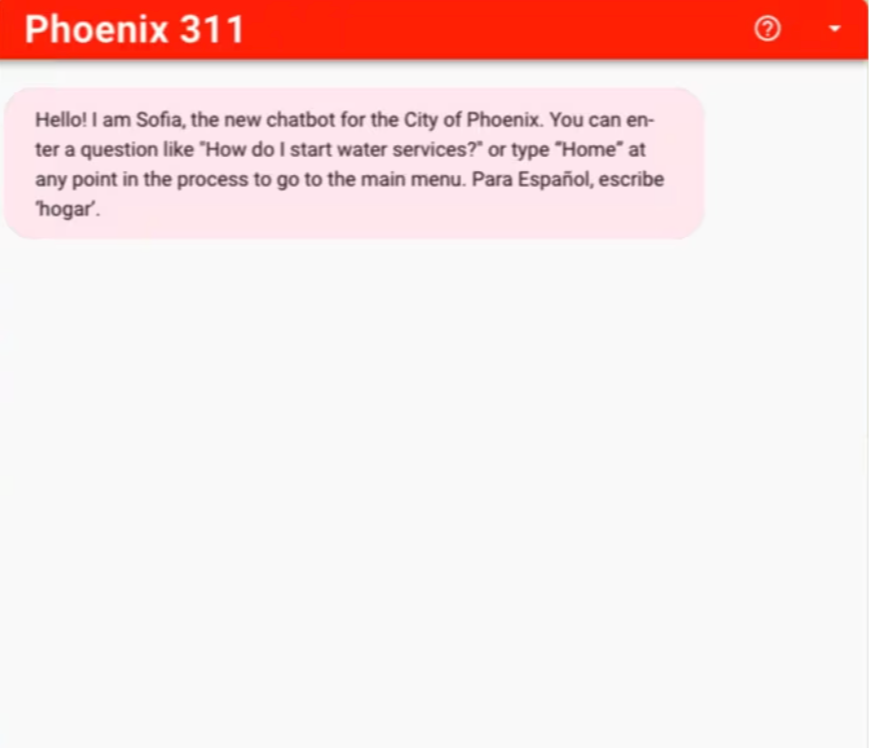
(e.g., home / hogar) so no group received a reduced or secondary experience.
Solution



Impact & Recognition
National Recognition
Supported the City of Phoenix being named a 2021 Digital Cities Survey Winner, reflecting a citywide commitment to accessible and innovative digital services.Data-Driven Excellence
Aligned with Phoenix earning What Works Cities Gold Certification, meeting national standards for effective, data-informed government operations.Resident-Centered Impact
Enabled flexible and transparent digital services, supporting real-time access to information for 1.6M+ residents, especially during periods of increased demand.
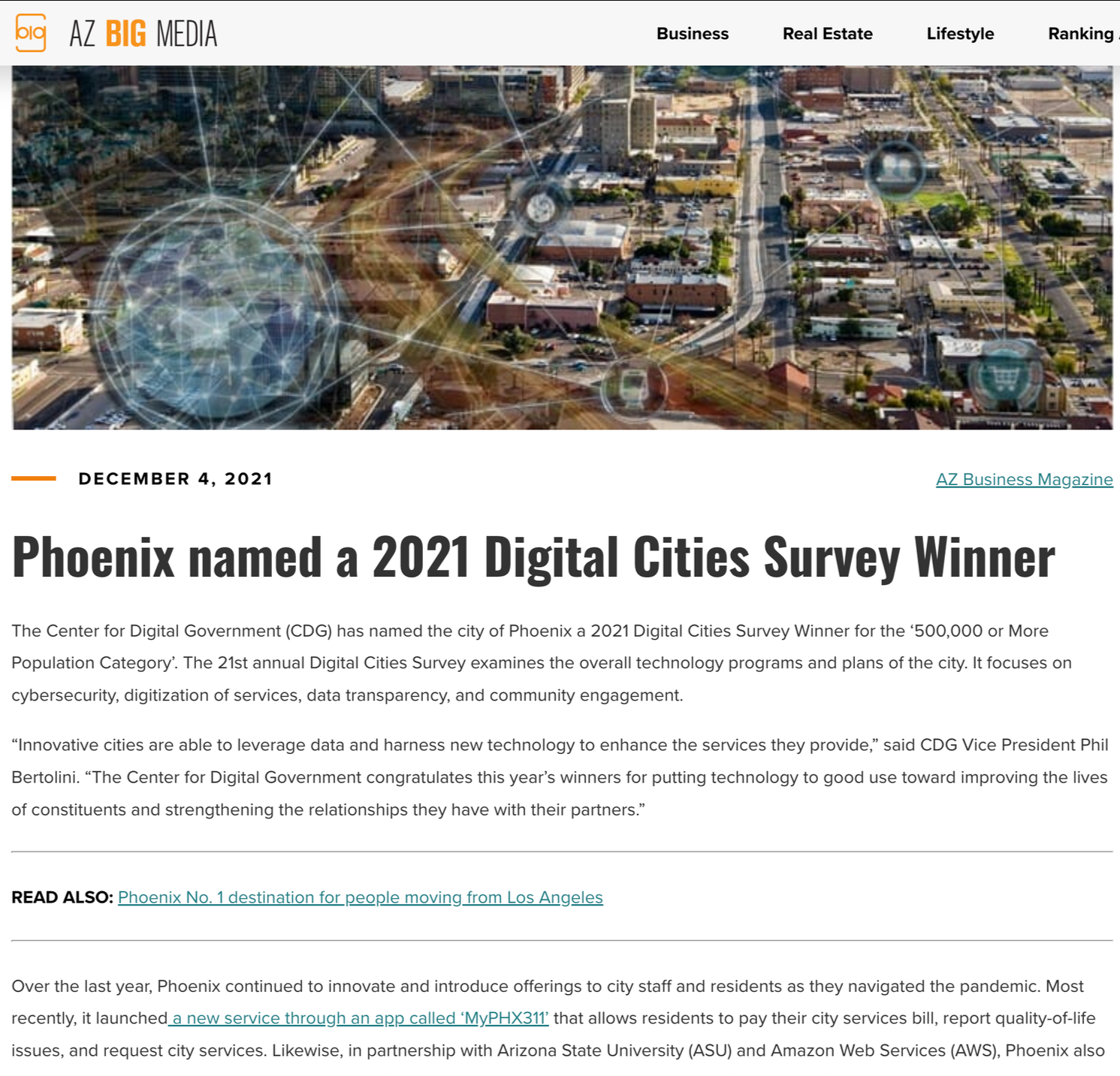
Website Link: Phoenix named a 2021 Digital Cities Survey



Reassuring Confirmation Moments
To reduce errors and anxiety, I introduced quick Yes / No confirmation steps (such as address verification), keeping interactions accurate, calm, and low-pressure.

What I Learned
This project was a turning point for me. It showed me that I wasn’t just designing a chatbot, but helping connect people to the support they needed. Seeing how easily users became frustrated by confusing systems pushed me to think more deeply about the human side of design.
Working through research and low-fidelity wireframes taught me how to simplify complex flows and focus on clarity. Iterating through feedback reinforced how small, thoughtful design decisions can significantly improve the user experience.
Most importantly, this project sparked my interest in pursuing UX design. It showed me that impactful design doesn’t have to be loud or complex. Even quiet, intentional choices can make someone’s day a little easier.